Free is great. Free also won’t notice your mistakes.
A paid teacher is worth it when you need something free resources can’t give you: someone who listens to you speak, spots your recurring mistakes and adapts the next step. If you are exploring a language for fun or only need vocabulary and grammar, free resources can carry you a long way.
There is a huge amount of free language material online. Podcasts, videos, flashcards, grammar guides, people explaining the subjunctive like they are sharing a family secret. So paying someone needs a reason better than “everyone else does.”
What can you learn for free?
A lot. Free resources can build vocabulary, explain grammar, train your ear and introduce you to the culture behind the language. With a committed conversation partner and a plan, you can get real speaking practice without paying anyone.
That matters. Access to learning should not be a luxury, and buying a lesson is not the only respectable way to learn.
What free material usually does not do on its own is respond to you. A video can explain the difference between two similar verbs. It can’t hear you pick the wrong one while describing your weekend and ask a follow-up that helps you notice the pattern.

What does a paid lesson add?
Three things, mostly: feedback, adaptation and a reason to show up. A teacher hears what you actually said, changes the exercise when you hesitate, and expects you at a set time.
| You need | Free resources | A paid teacher |
|---|---|---|
| New vocabulary and grammar rules | Plenty of good options | Helpful, rarely essential |
| Listening practice | Podcasts, video, audio | Useful when you need replies adjusted to you |
| Speaking with real responses | Possible with a conversation partner | Reliable, scheduled, at your level |
| Someone to catch repeat mistakes | Hard to find | Core part of the job |
| A plan for your gaps | You build it yourself | Built with you, changed as you improve |
Read the table as a map, not a verdict. Pick the row that matches your actual problem.
For a complete beginner, a good teacher doesn’t expect an hour of effortless conversation. They start with simple phrases, short exchanges and repetition that slowly gets less scripted. That pace is hard to get from a fixed course, because a course can’t see you hesitate.
Five questions to ask before you book
- Am I getting closer to a specific use? Can you keep a family conversation going, or ask a follow-up when directions confuse you?
- Do I know what to practice next? If not, targeted feedback is worth money.
- Am I speaking with people regularly? If not, find a free exchange partner or book structured practice.
- Does my routine survive a busy week? A booked lesson gives you a commitment, but you still practice between lessons.
- Would an hour of feedback fix something I keep tripping on? If yes, one lesson may beat another app subscription.
If you answered “no problem, I’m just exploring,” you can wait. You do not need to buy a lesson to prove you are serious.
If you are sampling several languages, learning a few phrases for fun, or can’t yet make room for practice, free resources are plenty for now. A teacher also can’t help much if the lesson is your only contact with the language all week. One lesson plus a little review beats a lesson that stands alone.
Judge value by outcomes, not by notes. Before a lesson, name a task: “Ask for directions without switching to English.” Afterward, ask whether you really attempted it, learned what went wrong and know your next step. Twenty pages of notes that leave you unready to talk are not progress.
How to get your money’s worth
A teacher can’t practice for you. A good split looks like this:
- Before the lesson: review the words for one real situation using free material.
- During the lesson: have the conversation, ask questions, request feedback on one thing.
- After the lesson: repeat the phrases you struggled with, using notes, recordings or a free partner.
- Next lesson: bring the obstacle you couldn’t solve alone.
Try this brief with a new teacher: “I’m learning ____ for ____. I can ____ but I struggle with ____. Can we practice that conversation and review what I got wrong at the end?”
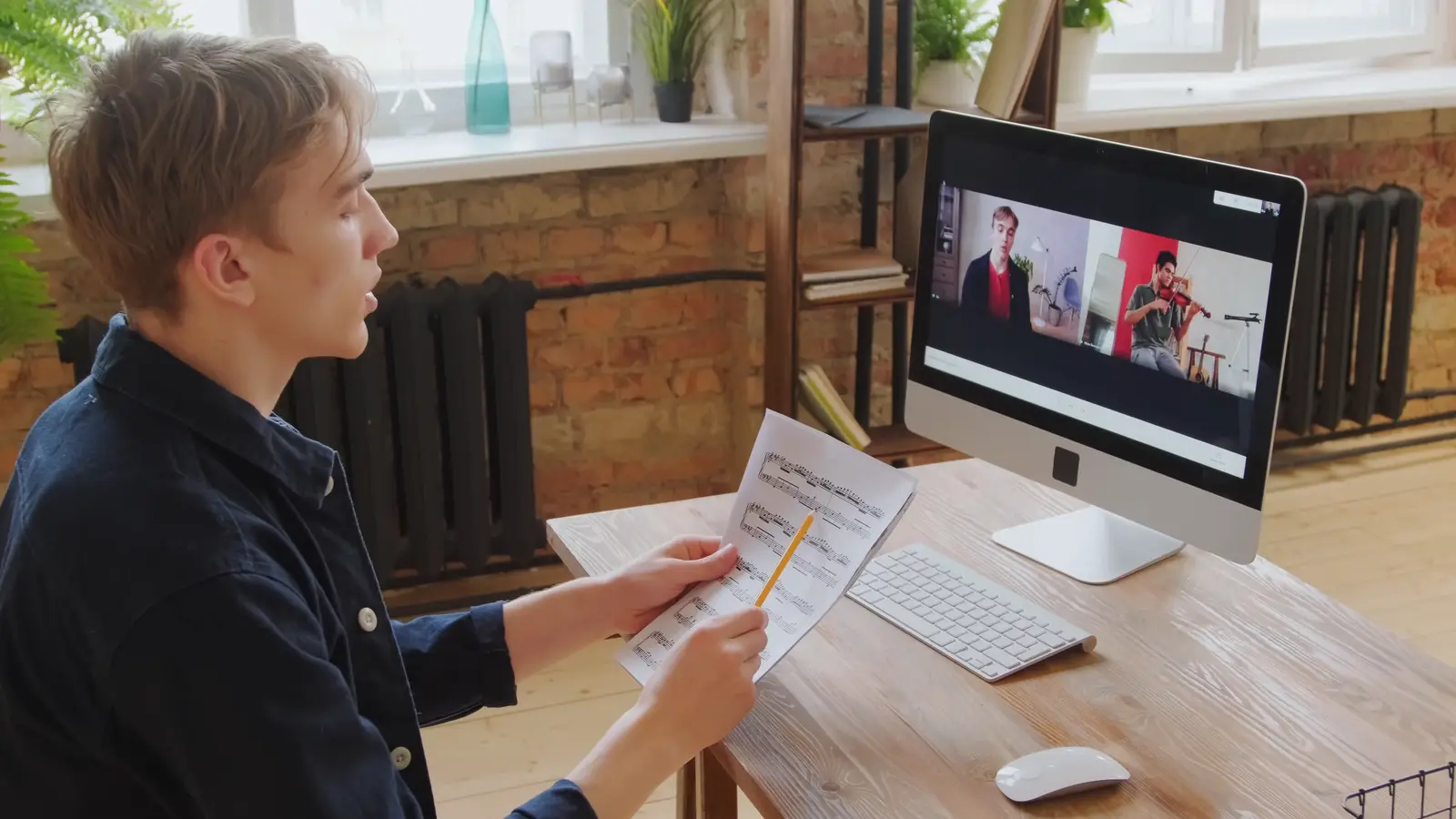
A higher rate does not guarantee a better lesson either. Experience with your goal, such as an exam, may be worth it. For a friendly weekly conversation, fit and schedule often matter more. Teachers publish short mini lessons, so you can see their style before you book, and you see the full price before you pay. For a closer look at weighing the cost, read how to compare the value of online language lessons.
You don’t need to cancel your app or stop the podcasts. Use them for repetition and exposure. Use a teacher for the part they can’t do: listening to you and answering back. If you are weighing a streak against speaking time, this guide on streaks and conversation goals may help.
Our view: paying is worth it when feedback is your missing piece, and not worth it when you are still deciding whether you like the language. Both answers are fine.
Where your lesson money goes
On Nattive you pay per lesson. There is no subscription. About 10% of every lesson price is a Classroom contribution, included in the price you see, that helps fund live English courses for people who otherwise couldn’t afford them. Nattive is a company, not a charity, and the contribution is not a donation. Our public goal is to fund 100,000 hours of live English teaching by the end of 2032.