Skip to content
Nattive

Make yourself misunderstood. Make a difference anyway.

When a language misunderstanding happens, pause, identify the part you missed and ask for a repeat or rephrasing. If the other person misunderstood you, try a simpler sentence or a concrete example. These are skills you can practice before the conversation matters.
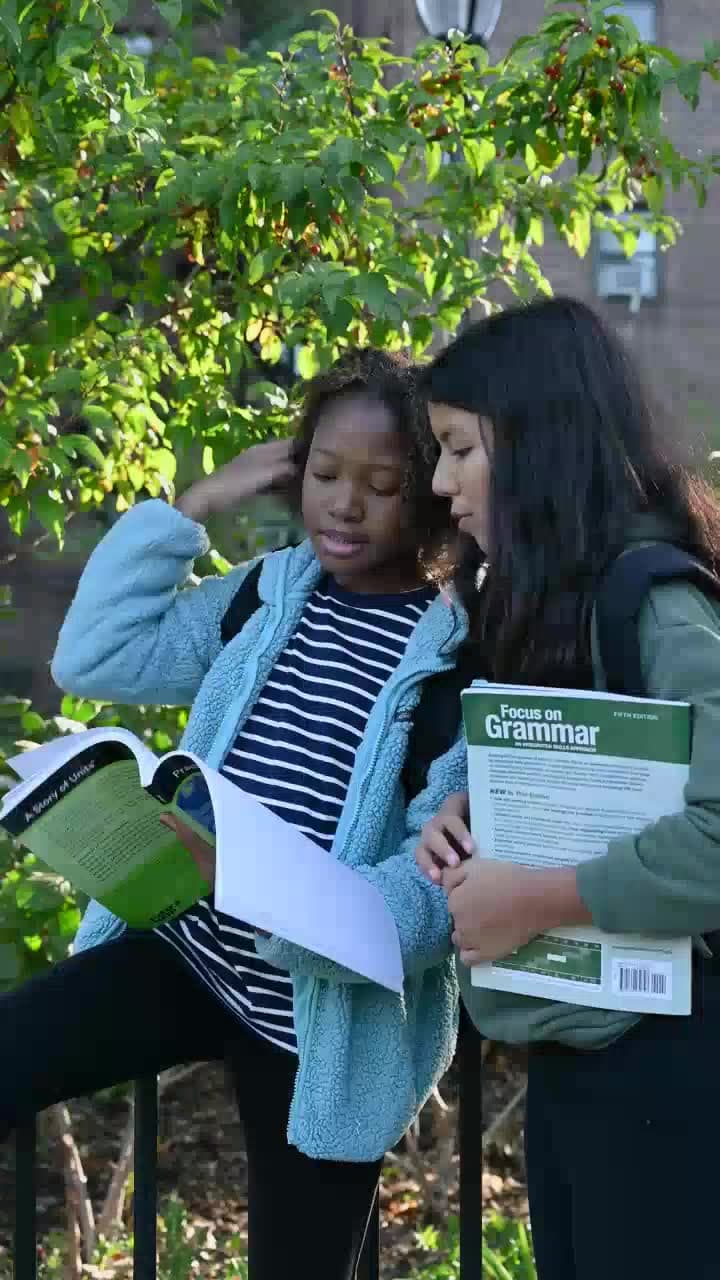
Nobody is setting out to cause confusion. Sometimes your carefully chosen sentence simply arrives wearing a different meaning.

Learn how to ask for help in the language

Keep one or two phrases ready before adding more. The examples below use polite forms of address where appropriate.

What you needSpanishFrenchGerman
Please repeat¿Puede repetir, por favor?Pouvez-vous répéter, s’il vous plaît ?Können Sie das bitte wiederholen?
More slowly, pleaseMás despacio, por favor.Plus lentement, s’il vous plaît.Langsamer, bitte.
I don’t understandNo entiendo.Je ne comprends pas.Ich verstehe nicht.

Ask your teacher which forms fit the people you plan to speak with. A family conversation may use a different form of address from an unfamiliar formal interaction.

The Five College Center for World Languages recommends learning clarification phrases early and practicing them in the language you are studying. That makes asking for help part of the conversation itself.

Two friends with backpacks reading a map on a station platform

Narrow down what you missed

Repeating an entire paragraph may leave you in the same place. If you caught most of the message, ask about the missing detail: the day, the name or the location.

Your teacher can help you build useful versions of questions such as “Saturday or Sunday?” and “Do you mean the station?” For an important detail, repeat your understanding back and let the other person confirm it.

If you are the one being misunderstood, start again with a shorter statement. Describe the object or situation if you cannot remember the exact word. Switch language or use writing when that is the clearest way to resolve something important.

Give recovery its own lesson exercise

Try a two-way drill:

  1. Describe a simple plan, such as meeting for coffee.
  2. Ask your teacher to check one detail or signal that they missed something.
  3. Clarify it using a short explanation.
  4. Switch roles and ask about something in their plan.
  5. Finish by confirming the agreed time and place.

You are practicing how to keep the exchange useful when the first attempt is imperfect. That is a more practical goal than hoping every conversation follows a script.

Your lesson can contribute before your sentences are flawless

A man in a beige jacket laughing during a video call

Nattive’s paid lessons help fund free group English teaching for learners who cannot afford private language education. We are working toward 100,000 hours through Classroom.

Choose a teacher who gives you space to try, clarify and try again. Every paid lesson also helps build that shared mission.

Explore Spanish, French or German lessons.

A commitment we can be measured against

100,000 hours of live English teaching by the end of 2032.

That’s our public mission target. We’ll show the hours we’ve funded, the hours actually delivered and the Classrooms that make up that progress. We want our community to know what their lessons are helping make possible.

See our impact

Every hour counts

hours funded
0
hours delivered
0

Launching soon

Today: 0 hours delivered. Next milestone: our first Classroom, 8 hours.

Our first Classroom: 8 hours of teaching. Then 100 hours. Then 1,000. Then 10,000. Together, each stage takes us closer to 100,000.

We’re building the first Classroom. Follow our progress as paid lessons help make more teaching possible.

An hour means one hour of teacher-led English class time, whether five or eight learners attend.

The next milestone: our first Classroom

Our first Classroom: 8 hours of teaching. Then 100 hours. Then 1,000. Then 10,000. Together, each stage takes us closer to 100,000.

The next Classroom

Your paid lessons help fund the next four-week English course. See how close we are to covering eight hours of live teaching.

Follow this Classroom

0 of 8 hours funded towards the first Classroom

Teaching starts once courses are funded and scheduled.

How your booking helps

When you book a paid private lesson on Nattive, a Classroom contribution is allocated towards funded English teaching. Contributions are pooled to fund group courses; the teaching takes place when a course is funded, scheduled and delivered.

What happens when I take a lesson?
Part of what you pay goes to the Classroom fund, automatically, with every lesson you book. There's nothing extra to do.
How much goes towards it?
10% of the teacher's lesson price. It's included in the one price you see, and it's never taken from the teacher's pay.
What does it buy?
Teaching time. 8 hours of live English teaching funds one Classroom course, with the teacher paid for every hour.

A £27.50 lesson includes £2.50 for the Classroom, enough to fund 6 minutes of teaching.

Based on a £25 teacher lesson price. The 10% Classroom contribution is included in the price you see and is never taken from the teacher's pay.

Where does the contribution go?

  1. You book

    You choose your teacher and pay for a 1:1 language lesson.

  2. Classroom grows

    A clearly disclosed part of the total supports the Classroom fund.

  3. Teaching is funded

    When a course reaches its funding goal, that money is allocated to eight teacher-led hours.

  4. Teaching happens

    A paid teacher runs the class and we report the time delivered.

Funded and delivered

Classroom courses funded and Classroom courses delivered are two different moments, so we always report them separately.

Funded

Enough money has come in to pay for a Classroom course's 8 teaching hours.

Delivered

The classes have run and the teacher has taken the register.

A one-hour group lesson counts as one teaching hour, regardless of group size.